A ceiling water stain is a warning sign, not just a cosmetic problem. Before repainting or repairing the ceiling, find out whether moisture is still present and where it came from. Acting early can limit damage, mold risk, and repair costs.
A ceiling water stain can signal an active roof, plumbing, bathroom, or HVAC leak, not just a paint problem. Keep water away from electrical fixtures, turn off power if needed, and watch for dripping, soft drywall, bubbling paint, or sagging. Contact a plumber for likely plumbing leaks or a roofer for rain-related issues, then repair the ceiling only after the source is fixed and materials are fully dry.
A ceiling water stain is a warning, not just a cosmetic problem. Before planning repairs, I help homeowners identify the water source, stop the leak, and make sure the ceiling is safe and dry.
If water is near a ceiling light, fan, outlet, or electrical fixture, turn off power to that area at the breaker immediately. Do not touch switches, fixtures, or wet drywall while an active leak is present. Move furniture and electronics away from the affected area, then place a container beneath dripping water if it is safe to do so.
Once the water source is stopped, MrWalls Drywall & Painting can assess the ceiling for moisture damage and recommend the right repair.
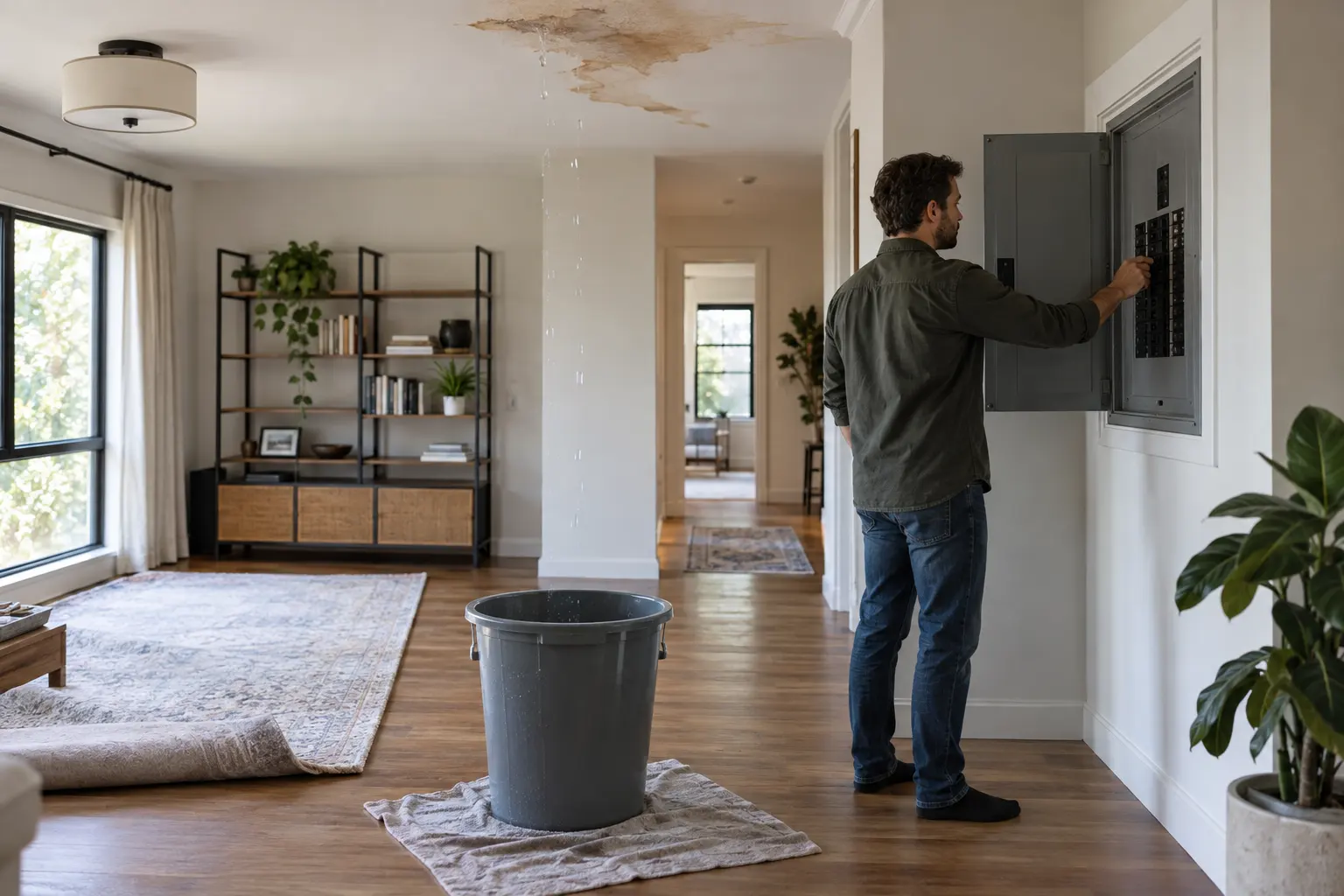
Before repairing a water stain, I make sure the moisture source is gone. A damp stain, fresh stain lines, or changing stains can point to an active leak that needs attention first.
Watch ceiling stains for a few days after rain, shower use, or running an upstairs fixture. If the area grows darker, feels soft or cool, develops a yellow-brown edge, or the paint begins to bubble, water is likely still reaching the drywall. A musty smell or new drip is another clear warning of a leak. At MrWalls Drywall & Painting, we can assess the damage and repair the ceiling once the source has been corrected.
As a drywall contractor, I tell homeowners not to judge a ceiling problem by the size of the stain alone. A small brown ring can signal an active leak above the drywall, especially after rain, plumbing use, or an HVAC issue. Urgent help is warranted when water is dripping, the ceiling feels soft or swollen, paint is bubbling, or the drywall is sagging. Turn off the water source if possible and keep people away from the affected area; wet ceiling material can lose strength quickly. Once the source is fixed and the area is dry, MrWalls Drywall & Painting can assess the damage, remove compromised material, and restore a clean, secure finish.
Before we repair ceiling stains, we identify the water source. A roof leak, plumbing leaks, or hidden supply lines can leave similar marks, but each calls for a different fix.
In our drywall work, we often find that a stained ceiling sits below a bathroom, laundry room, or second-floor kitchen. A slow plumbing leak at a drain, toilet seal, shower pan, or appliance connection can wet the drywall long before water drips into the room below. Pressurized supply lines can cause faster, more serious damage. We recommend stopping the leak first, then allowing the area to dry fully. MrWalls Drywall & Painting can assess the damaged ceiling and provide a clean, lasting repair once the water issue is resolved.
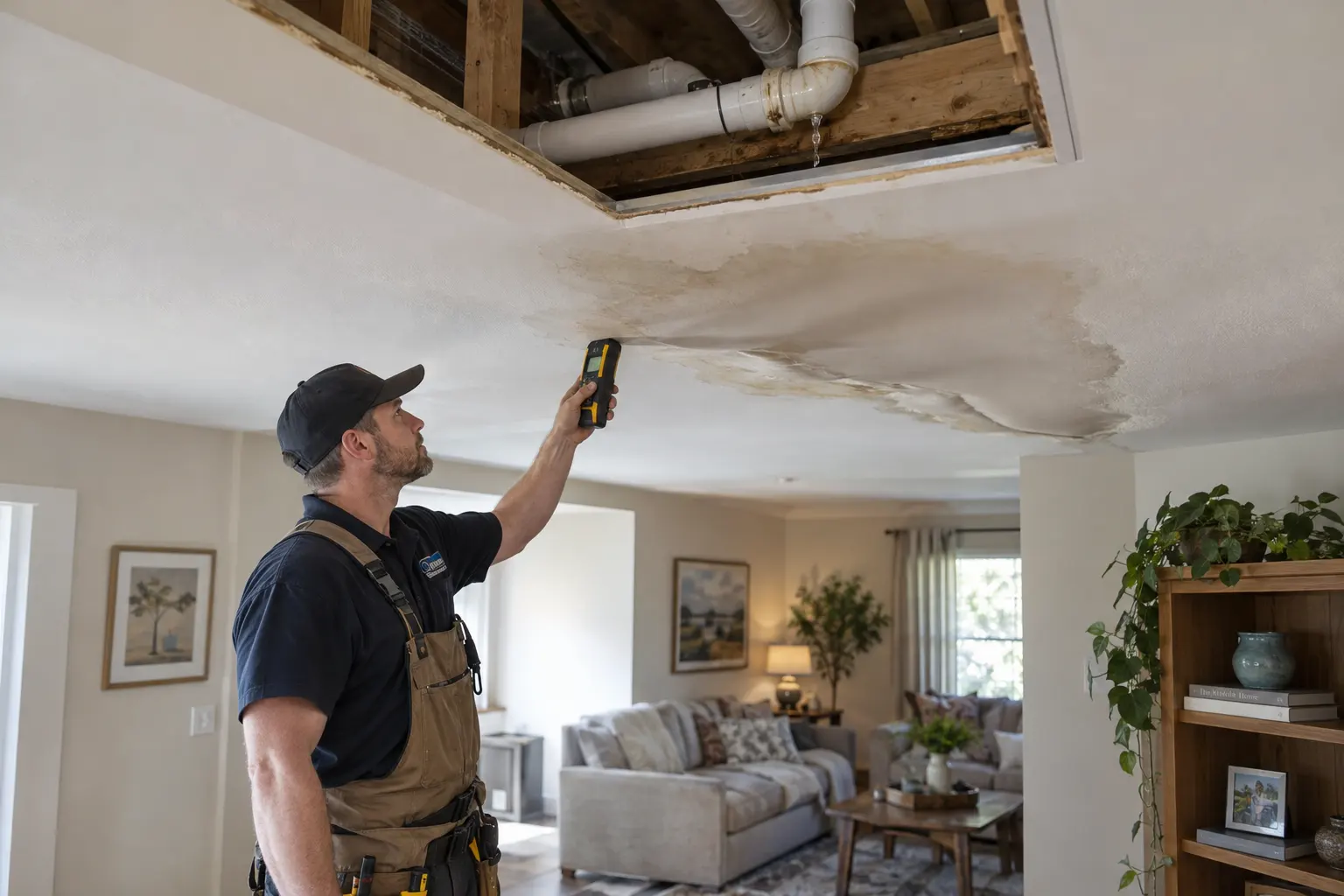
When homeowners ask me who to call first, I tell them to start with a plumber if the stain is below a bathroom, kitchen, laundry room, or any water line. Plumbing leaks can travel along framing before they show on the ceiling, so the visible stain is not always the source. If the leak appears after rain or sits near an exterior wall, chimney, or attic, call a qualified roof contractor instead; a roof leak needs to be stopped before any interior repair begins. At MrWalls Drywall & Painting, we repair the damaged ceiling once the cause is confirmed and the area has dried properly. That sequence protects your new drywall repair from repeat damage.
| What you notice | Who to call first | Why |
|---|---|---|
| Stain below a bathroom, kitchen, laundry room, or water line | Plumber | Plumbing leaks can travel along framing, so the visible ceiling stain may not be the source. |
| Leak appears after rain | Qualified roof contractor | The roof leak needs to be stopped before interior repair begins. |
| Leak or stain near an exterior wall, chimney, or attic | Qualified roof contractor | These clues point to a possible roof leak that should be addressed first. |
A stained ceiling can often be repaired, but the stain is only the visible symptom. At MrWalls Drywall & Painting, I first identify what caused the water stain, then determine whether cleaning, sealing, patching, or replacement will last.
I never patch over drywall that is still wet, soft, swollen, or sagging. The water source, often a roof, plumbing, or upstairs bathroom leak, must be fixed first. If the ceiling has lost its firmness, shows mold growth, or crumbles when pressed, the damaged section should be removed and replaced. Once the area is dry and structurally sound, I can install new drywall, finish the seams, and apply a stain-blocking primer before painting.
At MrWalls Drywall & Painting we repair ceiling water stains in the right order: find and fix the water source, dry the ceiling, restore damaged drywall, then seal and paint the stain. Skipping a step invites a repeat problem.
Painting over a water stain may look fine briefly, but ordinary paint often cannot block the discoloration. Minerals and tannins can bleed back through, leaving yellow or brown stains on the finished ceiling. More importantly, paint will not solve an active leak. Water trapped above the surface can soften drywall, cause peeling, and support mold growth. As a drywall contractor, I first confirm the area is dry and the leak is resolved. Then we repair any damage, apply a stain-blocking primer, and finish the ceiling for a clean, lasting result.
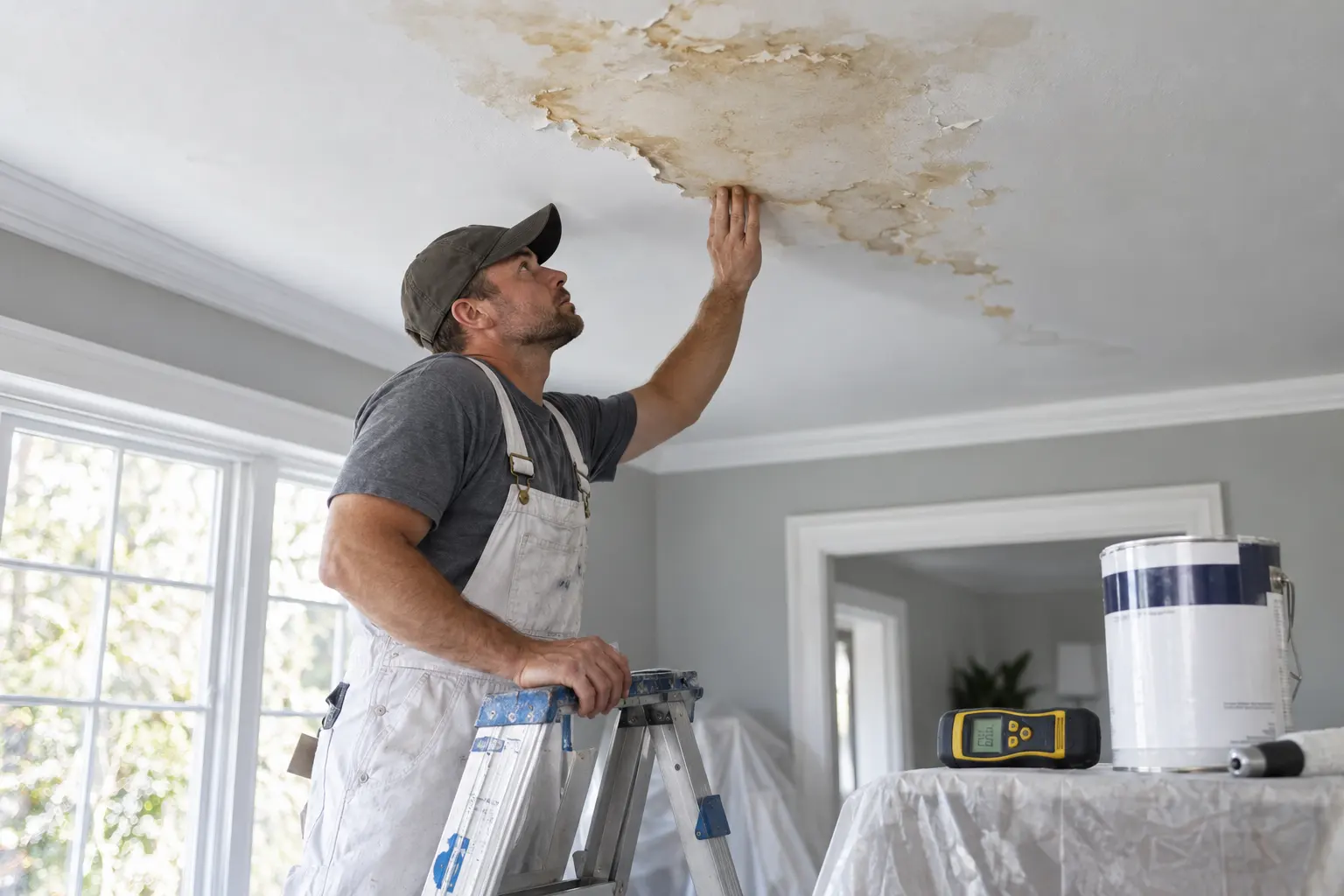
Before we repair a water stain on your ceiling, I recommend documenting everything. Take clear photos of the affected area, including wide shots that show its location and close-ups that capture the stain, bubbling paint, soft drywall, or visible leak marks. Note the date you first noticed the damage and whether it changes after rain, showers, or appliance use. This record can help with insurance claims and gives us a useful baseline when diagnosing the source. At MrWalls Drywall & Painting, we inspect the ceiling carefully before proposing repairs, because covering a stain without stopping the water can lead to the same problem all over again.
A ceiling stain can make an otherwise well-kept room feel neglected, even after the source of the leak is fixed. At MrWalls Drywall & Painting, we repair more than the visible mark. We inspect the area for softened drywall, loose joint tape, damaged texture, and signs that water damage has affected the surface below the paint. Then we remove compromised material as needed, rebuild the finish, seal the repaired area, and match the surrounding ceiling as closely as possible. The goal is a repair that looks intentional, not a patch that draws your eye upward. If you prefer not to manage the prep, products, and finish work yourself, our drywall contractors can restore the room with a clean, lasting result.
After repairing countless ceiling stains, I’ve learned that prevention usually comes down to finding small water problems before they spread. Check your roof after major storms, especially around flashing, vents, and older shingles. Inside, watch plumbing connections under bathrooms, kitchens, and laundry areas for slow drips or moisture. Keep gutters clear so water can drain away from the home rather than back up beneath the roofline. If a stain appears, address it promptly; waiting can allow damaged drywall, mold, and larger repairs to develop. At MrWalls Drywall & Painting, we can repair the affected ceiling once the source of the water is resolved.
Not until the leak is fixed and the ceiling is completely dry. Painting over damp drywall can trap moisture and allow the stain to return. Damaged or softened material may also need removal before priming and painting.
Drying time depends on the amount of water, airflow, humidity, and whether insulation is wet. The ceiling should be dry to the touch and checked for remaining moisture before repair. Hidden moisture can cause future staining, sagging, or mold growth.
No. Brown stains can come from roof leaks, plumbing leaks, bathroom fixtures, HVAC equipment, or condensation. Consider the stain’s location and timing: rain may indicate roofing, while stains below bathrooms, kitchens, or laundry rooms often point to plumbing.